
The battle of Bisesero: Telling a story of resistance through African voices
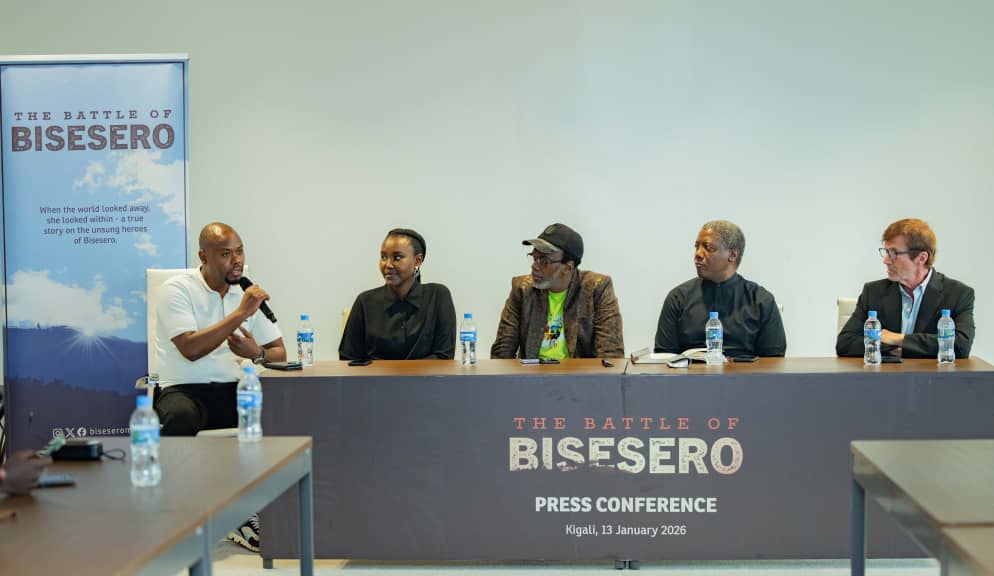
In the hills of Bisesero, in western Rwanda, tens of thousands of Tutsi men, women, and children resisted extermination during the 1994 Genocide against the Tutsi. For weeks, they organized themselves against repeated attacks, defending one another with stones, spears, and collective resolve. More than 50,000 people were killed in Bisesero, while around 1,000 survived, making it both one of the bloodiest sites of the genocide and one of its most powerful symbols of resistance.
At the center of this resistance was Aminadab Birara, a respected elder who led local communities in defending themselves against overwhelming genocidal forces. With no formal military training, Birara organized groups, gave strategic instructions, and urged people to confront fear itself. He was killed on June 25, 1994, alongside thousands of others. Today, his leadership stands as a defining legacy of Bisesero’s defiance.
It is this history—of collective resistance rather than passive victimhood—that an upcoming feature film, The Battle of Bisesero, seeks to bring to the screen.
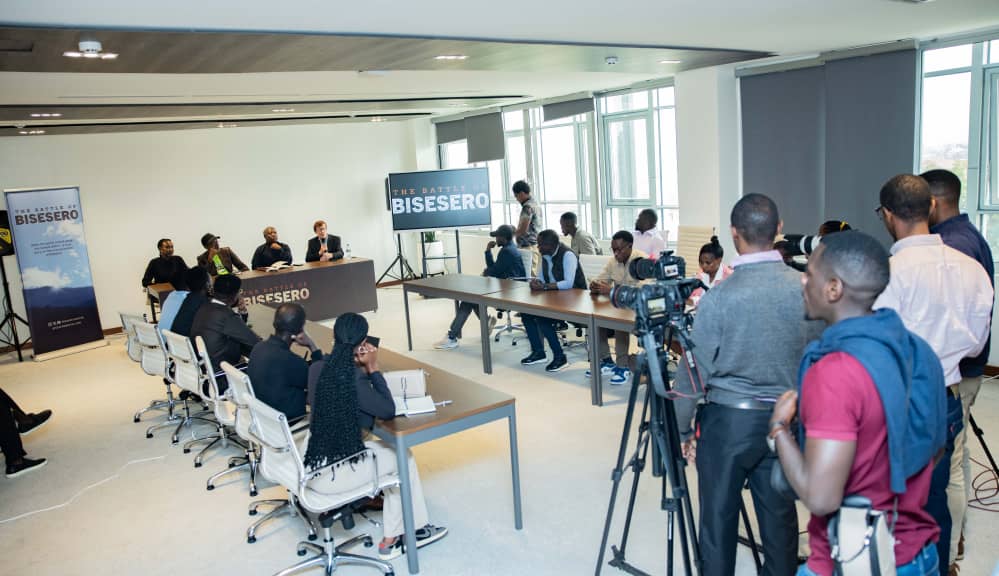
Set to be produced in Rwanda in 2026, The Battle of Bisesero revisits the massacres through an African-led cinematic lens, focusing on courage, survival, and moral responsibility. The project has been in development for more than three years, during which the creative team conducted extensive research, including repeated visits to Bisesero and in-depth conversations with survivors and historians connected to the region.
The filmmakers describe the project as part of a growing movement of African storytellers reclaiming historical narratives with sensitivity, accuracy, and accountability. Rather than dramatizing tragedy alone, the film foregrounds resistance and the human will to survive.
The film is directed by Mandla Dube, an award-winning South African filmmaker whose work includes Silverton Siege (Netflix), Kalushi: The Story of Solomon Mahlangu, JIVA, and Heart of the Hunter. Known for blending political history with emotional depth, Dube describes Bisesero as a story that remains urgently relevant today.
“This is a story of resistance,” Dube said. “They fought back. They refused to be victims. And I think that’s what people need today.”
Principal actor Wale Ojo, an award-winning Nigerian-British actor with international credits including Breath of Life (Amazon Prime), Black Earth Rising (Netflix), Foundation (Apple TV), and Johnny English Reborn, portrays Aminadab Birara in the film.
Despite being outnumbered and outgunned, Birara led a community that chose to resist rather than surrender. The film presents him not as a mythical hero, but as a man shaped by decades of persecution against the Tutsi, including earlier waves of violence in 1959, 1962, 1963, and 1973.
Ojo said portraying Birara required deep immersion in Rwanda itself.
“As a Nigerian acting in this film, I’m learning to be Rwandan,” he said. “I came here to understand the story from its roots. I spoke with survivors. You can’t play this truthfully without listening.”
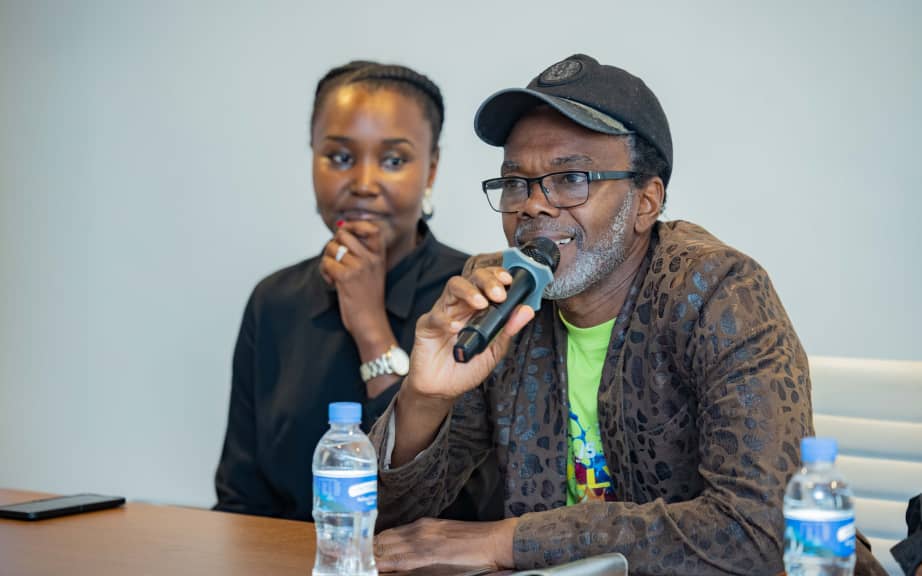
Ugandan actress Tracy Kababiito plays Epiphanie, Birara’s daughter, offering a perspective that centers youth, memory, and survival. Kababiito, who recently appeared in Netflix’s African Folktales Reimagined, said the story carries global lessons.
“Many people still don’t fully understand what happened in Rwanda in 1994,” she said. “This story teaches determination and forgiveness—not as forgetting, but as choosing not to be defined by the past.”
The film is produced by Richard Hall, an Emmy Award–winning producer best known for The 600: A Soldiers’ Story, a documentary about Rwanda in 1994 available on Amazon Prime. Hall, who is married to a survivor of the genocide, has a deeply personal connection to the subject.
In a personal interview with Cinemag, Hall explained why he continues to work on stories about the Genocide against the Tutsi.
“I think people should know the truth of what happened,” he said. “When I first went to the genocide memorial, I told myself I was going to do a film about this history. I had done documentaries before, but learning about this hit differently.”

Hall emphasized that the decision to produce The Battle of Bisesero in Rwanda was non-negotiable.
“This story belongs here. It happened here,” he said. “If we did it somewhere else, it wouldn’t be real. It wouldn’t be authentic.”
He also acknowledged the responsibility that comes with adapting true history.
“We have to do it the right way. If you twist the story, you give people the wrong history. That’s why we did thorough research and worked closely with survivors.”
To ensure authenticity, the production partnered with award-winning Rwandan filmmaker Joël Karekezi, who co-wrote the script alongside Nigerian filmmaker Ema Edosio-Deelen. Karekezi, internationally recognized for The Mercy of the Jungle, said the script took two to three years of research.
“This story had to be studied and understood before being told,” Karekezi said. “We’re still learning. That’s why we’re here.”
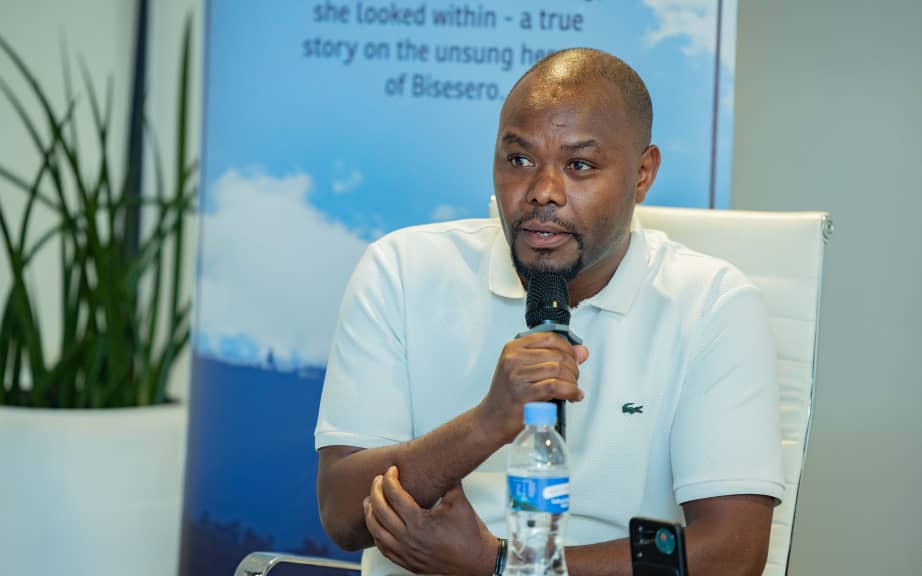
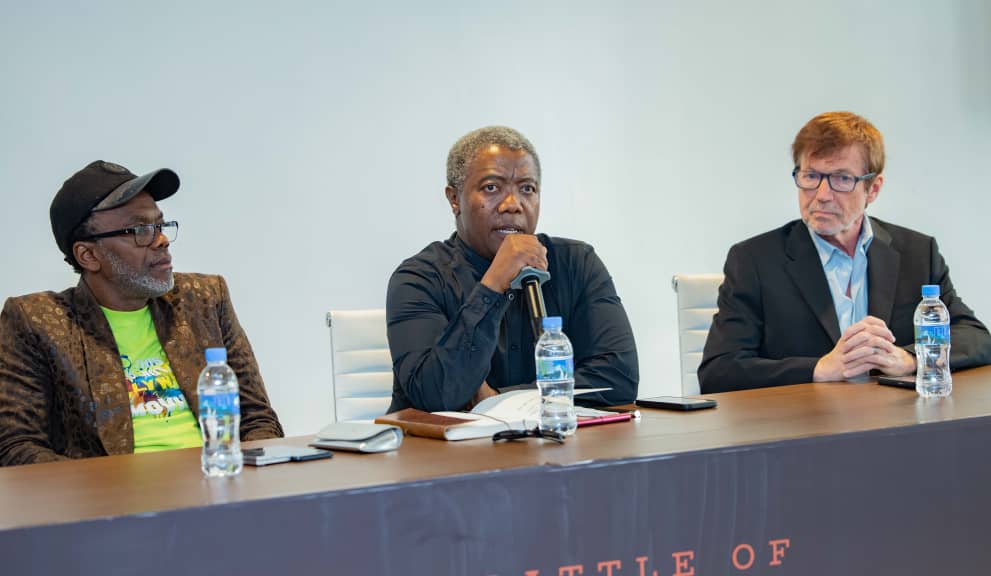
Before cameras roll, the production team conducted a four-day film workshop in Kigali from January 9–12, 2026, in partnership with the Ministry of Youth and Arts (MOYA). Led by Mandla Dube and Wale Ojo, the workshop brought together Rwandan actors, writers, directors, and producers.
More than 400 people applied, with 60 to 70 participants selected, highlighting both demand and emerging talent within Rwanda’s creative community.
“Rwandan youth is impressive,” Ojo said. “So many talents waiting to be discovered. Rwandan cinema is at a strong edge of becoming among the very best.”
The workshop also demonstrated strong government support. Ojo noted that Rwanda’s involvement went beyond logistical facilitation.
“I was surprised by how supportive the government was—hosting the workshop, providing accommodation,” he said. “This shows a real commitment to helping Rwandans and keeping history alive.”
Dube added:
“Where there is political will, there is people’s enthusiasm.”
For the filmmakers, education is not a side project—it is central to the film’s mission.
“We’re not here just to do a film,” Hall said. “We’re here to engage the audience and teach.”
The Battle of Bisesero will be distributed internationally, but its creators are clear about who it is for.
“This film is for Rwandans,” Ojo said. “It’s game-changing, and people should know this is their story.”
One of the workshop participants, Innocent Munyeshuri, reflected on what the story means for younger generations.
“It reminds us that it’s never enough to tell the story once,” he said. “We must keep owning it and telling the truth.”
As production approaches, The Battle of Bisesero positions itself not only as a cinematic project, but as an act of remembrance, education, and responsibility—honoring Aminadab Birara, the thousands who resisted alongside him, and the survivors who continue to carry this history forward.