
Surreal16 Co-Founder Michael Omonua Explains Why African Cinema Needs More Genre Films

Nigerian filmmaker and Surreal16 co-founder Michael Omonua believes African cinema must embrace more genre storytelling if filmmakers on the continent want to expand creative possibilities and reach wider audiences.
Speaking during the fourth edition of Kigali Cine Junction, where genre cinema took center stage through screenings, discussions, and masterclasses, Omonua shared his thoughts on the future of African filmmaking, Rwanda’s growing film industry, and why horror, fantasy, science fiction, and thrillers deserve a stronger place in African storytelling.
Founded in 2016 by filmmakers Michael Omonua, C.J. “Fiery” Obasi, and Abba T. Makama, Surreal16 emerged as an independent filmmaking collective challenging the conventions of Nigerian cinema. Inspired by Denmark’s Dogme 95 movement, the group promotes experimentation, artistic freedom, and unconventional storytelling, particularly through genres that are often overlooked in African cinema.
Over nearly a decade, Surreal16 has become one of Nigeria’s most recognized independent filmmaking movements, encouraging filmmakers to move beyond familiar formulas and explore new cinematic forms.
The collective’s philosophy closely aligned with this year’s Kigali Cine Junction theme, which focused on genre filmmaking as a way of expanding African cinema’s creative horizons. Invited as special guests, Surreal16 members engaged with audiences and emerging filmmakers through conversations about experimentation, independence, and the possibilities of genre cinema.
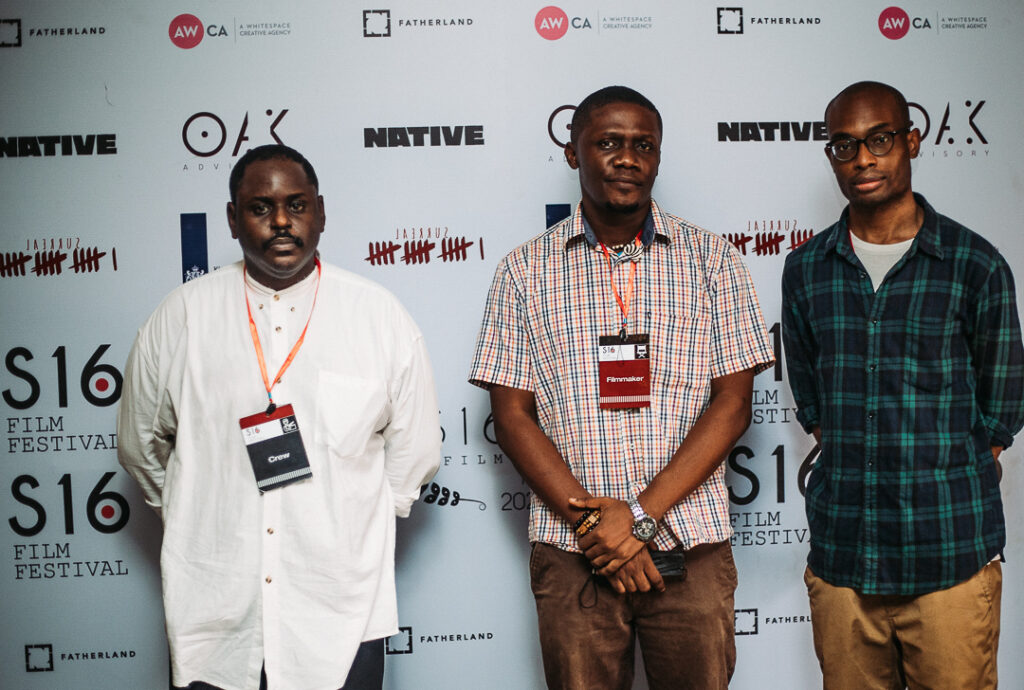
Abba T. Makama, C.J. Obasi and Michael Omonua
In an exclusive interview with Cinemag, Omonua reflected on his first visit to Rwanda, his impressions of Kigali Cine Junction, and why he believes African filmmakers should not limit themselves to traditional narratives.
Michael Omonua On Kigali Cine Junction
For Omonua, Kigali Cine Junction immediately made a strong impression. His visit marked his first time attending the festival and visiting Rwanda, but he praised the event’s organization and welcoming atmosphere.
“Wonderful. I think the organisation is as good as any festival I have been to,” he said. “It’s very welcoming. They made me feel at home here and made it as seamless and comfortable as possible for me. I’m not exaggerating—I am being very serious.”
Beyond the festival experience, the visit gave him an opportunity to reconnect with a film industry he has followed with interest over the years.
Discovering Rwanda’s Growing Film Industry
Although Omonua admitted he still has much to discover about Rwandan cinema, he said his interest in the country’s filmmaking community began in 2019 after meeting Rwandan filmmaker Moise Ganza at the Berlin International Film Festival (Berlinale).
Through those conversations, he learned about a growing generation of independent Rwandan filmmakers whose creative energy reminded him of Nigeria’s own independent filmmaking movement.
Among the Rwandan films he recalled watching was *Minimals in a Titanic World*, though he acknowledged there were other works he could not immediately remember by name. More than individual films, however, what stayed with him was the sense that Rwanda’s filmmakers are steadily building their own cinematic identity.
Omonua also highlighted Rwanda’s visual potential, pointing to the country’s landscapes, colours, and environments as elements that filmmakers can use to create distinctive stories.
“Coming from Nigeria, I took a two-hour walk around Kigali and there is visually more potential here than most places,” he said. “Just in terms of cinematography and aesthetics, because it is so scenic. The colours—there is a lot of potential.”
However, he cautioned against judging a country’s film industry based on only a few films. For him, understanding any national cinema requires time, curiosity, and a willingness to keep discovering new voices.
“You need to watch a lot of films in order to get a sense of any place,” he said.
Omonua believes that every filmmaker remains a student, regardless of experience or reputation. He pointed out that African cinema is filled with diverse traditions and histories that require constant exploration.
“As a student of film, there are always knowledge gaps,” he explained. “It could be Congolese cinema, South African cinema, Senegalese cinema—even Nigerian cinema. There’s always more to discover.”
That openness to learning is also central to the advice he gives young filmmakers across the continent.
“Just Make Films”: Omonua’s Advice to Emerging Filmmakers
Rather than waiting for perfect conditions, larger budgets, or advanced equipment, Omonua encourages filmmakers to start creating with whatever resources are available.
“Just make films,” he said. “If you have a phone, shoot on the phone. If you have a camera, use that camera. Don’t make excuses for not making films.”
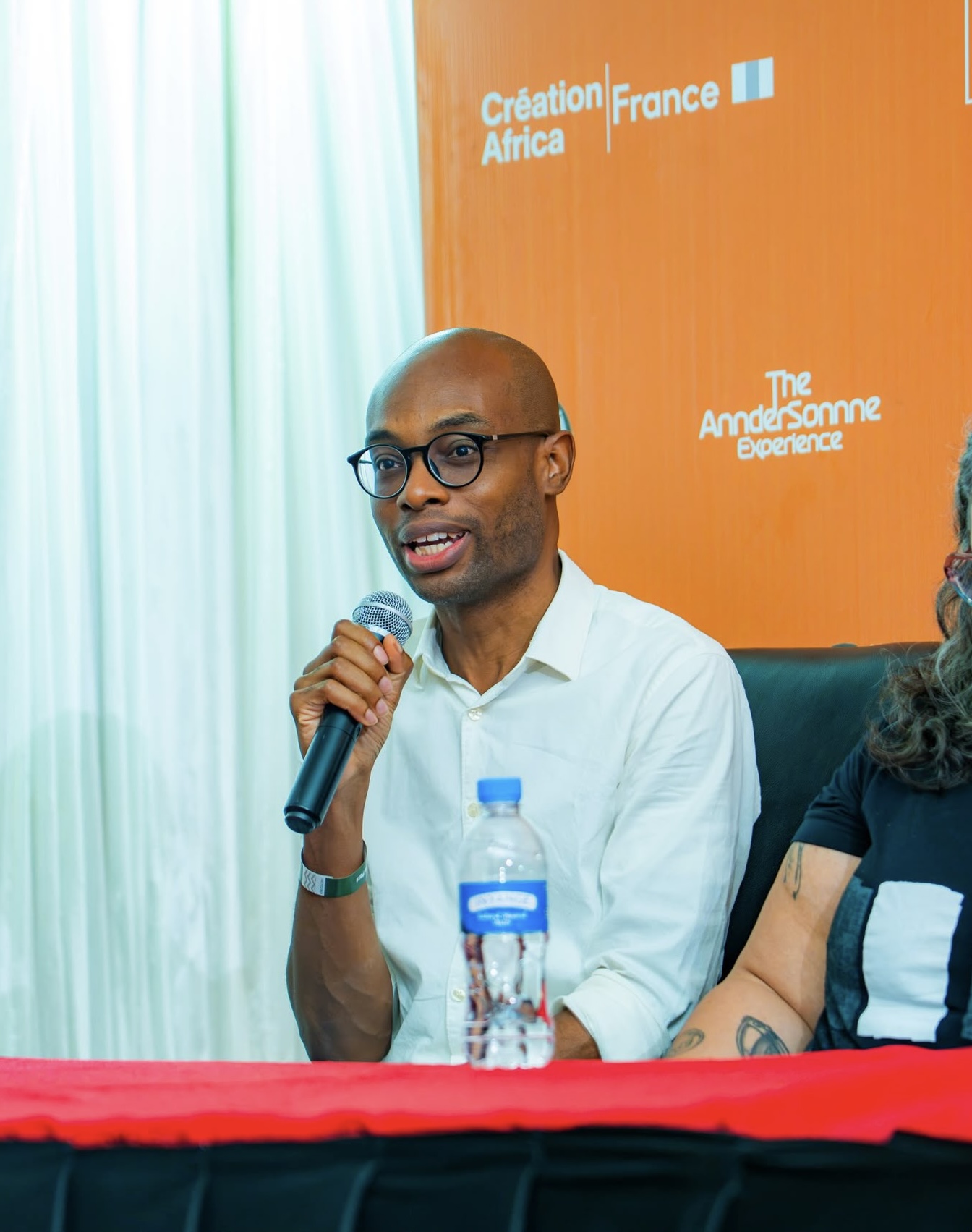
Michael Omonua, speaking at Kigali Cine Junction
While he recognizes that financing remains one of the biggest challenges facing African cinema, he believes limited resources should not prevent filmmakers from telling stories.
“It is difficult to make films, but we should not make excuses,” he said. “Maybe you have two friends and a phone—you can make a film. You can make a film with little or no money.”
For Omonua, creativity often begins with the willingness to experiment rather than waiting for ideal circumstances.
Why African Cinema Needs More Genre Films
When asked what African film industries need most to continue evolving, Omonua’s answer was immediate: more genre cinema.
He believes global audiences have often been introduced to Africa through a limited range of stories, frequently centered on hardship, poverty, or rural experiences. While he acknowledges the importance of those narratives, he argues they represent only one part of the continent’s reality.
“People outside the continent often expect a certain type of African story,” he said. “But sometimes I just want to see an average person who lives in the city in a genre film because that’s what people understand.”
For Omonua, genres such as horror, fantasy, science fiction, crime, and thrillers can allow African filmmakers to tell culturally specific stories while connecting with audiences familiar with those cinematic forms.
He believes horror, in particular, remains one of the continent’s biggest opportunities.
“If I heard there were 10 or 15 horror films coming from Rwanda every year, I would be really interested,” he said. “Every country has its own ghost stories, its own history, its own fears. Those are stories worth telling.”
Rather than seeing genre cinema as separate from African identity, Omonua views it as another way of expressing it. Horror can draw from local folklore, fantasy can explore oral traditions, and science fiction can imagine African futures shaped by contemporary realities.
For him, embracing genre filmmaking is not about copying Hollywood but about creating stories that are deeply rooted in African experiences while reaching audiences around the world.
As Kigali Cine Junction continues to create space for conversations around genre cinema, Omonua’s message reflects a wider shift within African filmmaking: the continent’s stories do not need to be limited to one type of narrative.
Through new genres, new perspectives, and greater experimentation, African filmmakers have the opportunity to expand what the world expects from African cinema.