
- Home
- Events
- L’Afrique Fait Son Cinéma looks beyond screenings to support African and Caribbean filmmakers
L’Afrique Fait Son Cinéma looks beyond screenings to support African and Caribbean filmmakers

Getting a film selected for an international festival can bring attention to a filmmaker’s work, but that does not always translate into distribution deals, buyers or opportunities to reach wider audiences. For African and Caribbean filmmakers, building those connections remains an important challenge.
This is one of the issues L’Afrique Fait Son Cinéma (L’AFSC) is seeking to address as it continues to develop its platform for African and Caribbean cinema.
Founded in 2019, the festival brings films from Africa, the Caribbean and their diasporas to audiences in Paris. Over eight editions, it has grown beyond screenings to include masterclasses, industry meetings, pitch sessions and cultural activities involving music, fashion and food.
According to its founder and general delegate, Blaise Pascal Tanguy, the festival has received more than 2,480 films from 52 countries and presented 169 awards since its beginning. For its 2026 edition, 56 films from 24 countries were selected for competition from more than 300 submissions.
Looking back at this growth, Tanguy said he had not expected the festival to attract films from so many countries in such a short time.
“I expected the films to come. I did not expect them to come from so many countries, so quickly,” he said.
But attracting films and audiences is only part of running a festival. Tanguy said securing the money needed for each edition remains a challenge, with the team having to seek new sponsors, partners and institutional support.
“The reputation went faster than the budget,” he said.
He sees the same problem across African and Caribbean cinema, where recognition does not always translate into financial support.
“African and Caribbean cinema gets a lot of applause and very few cheques,” he said.
creating connections beyond the screenings
The festival’s development has also involved a change of venue. Its first six editions were held on the Champs-Élysées before moving to EICAR Paris in 2025, where the 2026 edition also took place.
While the Champs-Élysées offered visibility and prestige, Tanguy said the film school provides practical facilities for screenings, equipment, masterclasses and industry activities in one place. It also brings the festival closer to students and people interested in working in film.
He described the possibility of a young person watching a Tanzanian film in the morning and attending an acting masterclass in the afternoon as part of what the festival wants to offer.
“A festival should not only show films. It should pass something on to those who will make the next ones,” he said.
The people who return to the festival are another part of its development. Tanguy cited actor Landry Gnamba, who won the Ubuntu d’Or for Best Actor at the festival and later returned as a member of its feature film jury.
For him, seeing a former award winner return in that role is one example of the relationships the festival hopes to build over time.
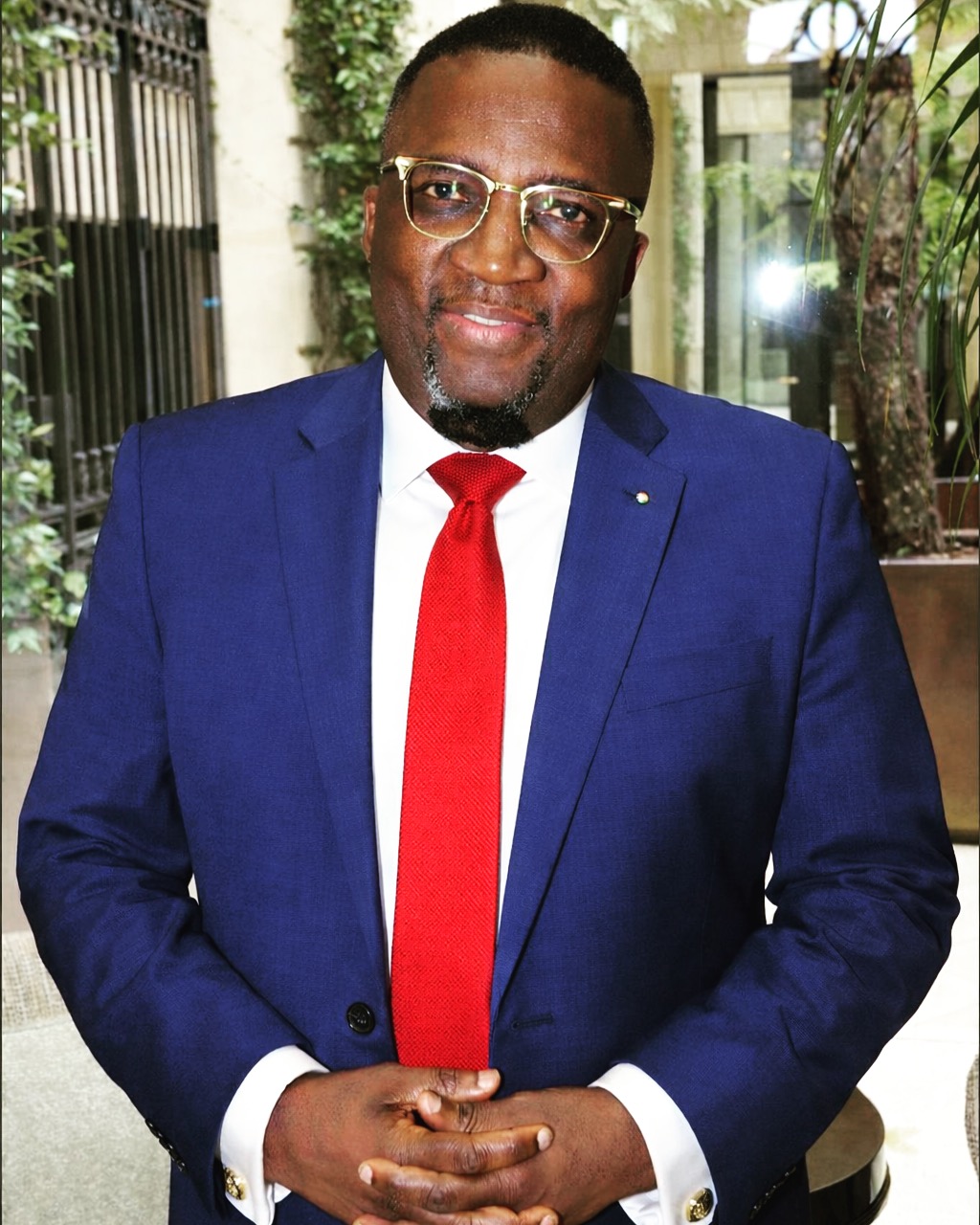
Founder and general delegate, Blaise Pascal Tanguy
making room for new ways of filmmaking
The 2026 edition also introduced prizes for AI-generated films and mobile filmmaking, reflecting the festival’s interest in emerging production methods.
This year’s theme was “Imagination cannot be programmed: telling tomorrow, our stories in the age of artificial intelligence.”
Through these categories, the festival is making room for filmmakers who may not have access to conventional production equipment or large budgets. Tanguy said that a young person with a phone and a story should be judged on the strength of that story, regardless of the tool used to make the film.
The festival also organised Défi Kino-AI, an AI training initiative for young people from the Paris region, giving participants the chance to work directly with the technology.
But can these tools really help young filmmakers make films without millions of dollars? Tanguy believes they can make production more accessible, particularly by reducing the cost of shooting and post-production. However, he sees a difference between making a film and finding an audience for it.
“To make the film, yes. To get it seen, no,” he said.
He added that technology cannot replace the writer, actor or point of view behind a film, nor can it solve the difficulties of finding buyers and distributors.
“Talent has never been the problem. The channels are,” he said.
from recognition to business opportunities
When asked what African filmmakers need most to get their films seen internationally, Tanguy pointed to three things: access to buyers, financial support and industry connections at the project stage, and greater visibility for film professionals.
He linked each of these needs to an initiative developed through the festival. The Market, launched during the 2026 edition, is intended to connect filmmakers with potential buyers. Through LE CLUB, filmmakers can present their projects to producers, distributors, broadcasters and lawyers in search of partners and financial support. AFNETWORK, meanwhile, is building a professional database for African and Caribbean cinema, which Tanguy described as “a kind of IMDb for African and Caribbean cinema.”
He believes these connections matter more to a filmmaker’s career than recognition alone.
“Praise is pleasant, but a trophy does not pay a crew. What changes a filmmaker’s life is a signed contract,” he said.
looking ahead to the next edition
As the festival looks towards its ninth edition, Tanguy wants to strengthen its business activities, particularly The Market, following its first edition. He also hopes to bring the festival closer to film industries across the African continent, with Nigeria, Benin, Rwanda and Morocco among the countries of particular interest.
The call for films for the ninth edition is scheduled to open on November 30, 2026, through FilmFreeway. Tanguy also had a direct message for filmmakers in Rwanda: “Send us your films.”
After eight editions, L’Afrique Fait Son Cinéma is continuing to build on its role as a platform for African and Caribbean films. Its next challenge will be to turn the attention it attracts into stronger industry relationships and practical support for the filmmakers whose work it brings to audiences.