
Joël Karekezi: Cinema, memory, and the responsibility to remember
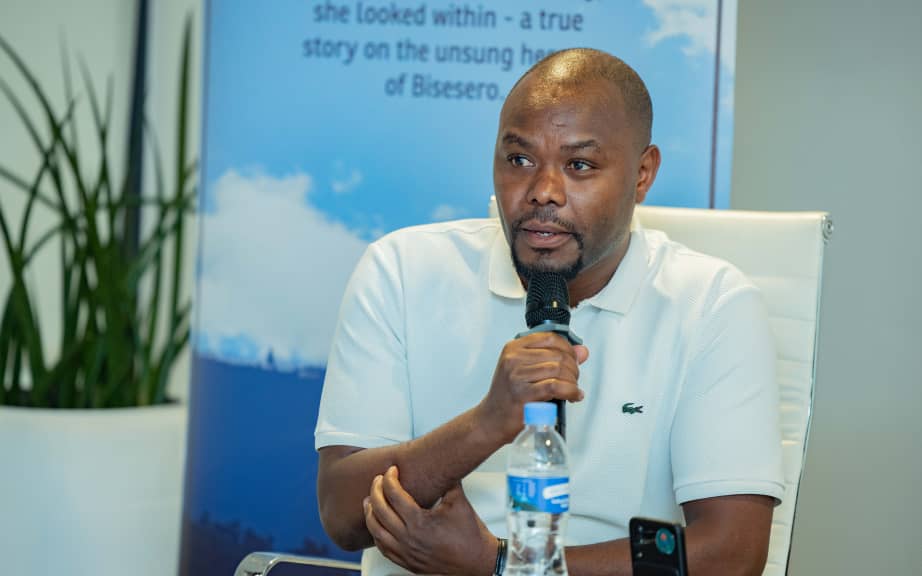
Joël Karekezi stands among the most important voices in contemporary Rwandan cinema. A screenwriter, director, and producer, his films confront conflict, memory, and the fragile yet necessary act of forgiveness with rare honesty and restraint. A survivor of the 1994 Genocide against the Tutsi, Karekezi has built a body of work that refuses erasure, insisting on storytelling not only as an artistic pursuit, but as a moral responsibility and a tool for collective healing.
Born in Rubavu, western Rwanda, Karekezi grew up in a family marked by loss long before he ever held a camera. During the genocide, his father was killed, and his family was violently scattered. Karekezi and his brother fled across the border into what was then Zaire, now the Democratic Republic of the Congo, where they hid until the country was liberated. These experiences would later become the emotional and ethical foundation of his cinema.
Although his artistic path seems inevitable in retrospect, Karekezi did not initially study film. He spent three years studying Biology and Chemistry at the Kigali Institute of Education (now the University of Rwanda – College of Education). His passion for storytelling, however, pushed him elsewhere. In 2008, he earned a diploma in Film Directing from Cinécours, a Canadian online film school, before attending the Maisha Film Lab in Uganda in 2009, where his voice as a screenwriter began to take shape.
It was at Maisha that Karekezi wrote The Pardon, a short film inspired by a question that haunted him: What would happen if I met the person who killed my father? Released in 2010, The Pardon follows Manzi, a former prisoner released after 15 years for crimes committed during the genocide, as he returns to live alongside the friend whose family he helped murder. The film explores guilt, accountability, and the painful possibility of reconciliation. It won the Golden Impala Award at the Amakula Film Festival in Uganda and Best Short Film at the Silicon Valley African Film Festival, screening widely across Africa and beyond.
Karekezi expanded this reflection into his first feature film, Imbabazi: The Pardon (2013). The film deepens the moral complexity of its short-film predecessor, examining forgiveness not as a simple virtue but as a difficult, ongoing choice. Imbabazi won the Nile Grand Prize at the Luxor African Film Festival and received international recognition, confirming Karekezi as a major emerging voice in African cinema.
His international breakthrough came with The Mercy of the Jungle (2018), which premiered at the Toronto International Film Festival. Set during the Second Congo War, the film follows two Rwandan soldiers separated from their unit and forced to survive in a hostile jungle landscape shaped by violence and moral ambiguity. Far from a conventional war film, it focuses on human vulnerability rather than heroism.
The film went on to win the Etalon d’Or de Yennenga at FESPACO, Africa’s highest cinematic honor, as well as Best Film and Best Actor at the Africa Movie Academy Awards. It also received Best Screenplay at the Khouribga African Film Festival and the Jury’s Best Feature Narrative Award at the Pan African Film Festival in Los Angeles.
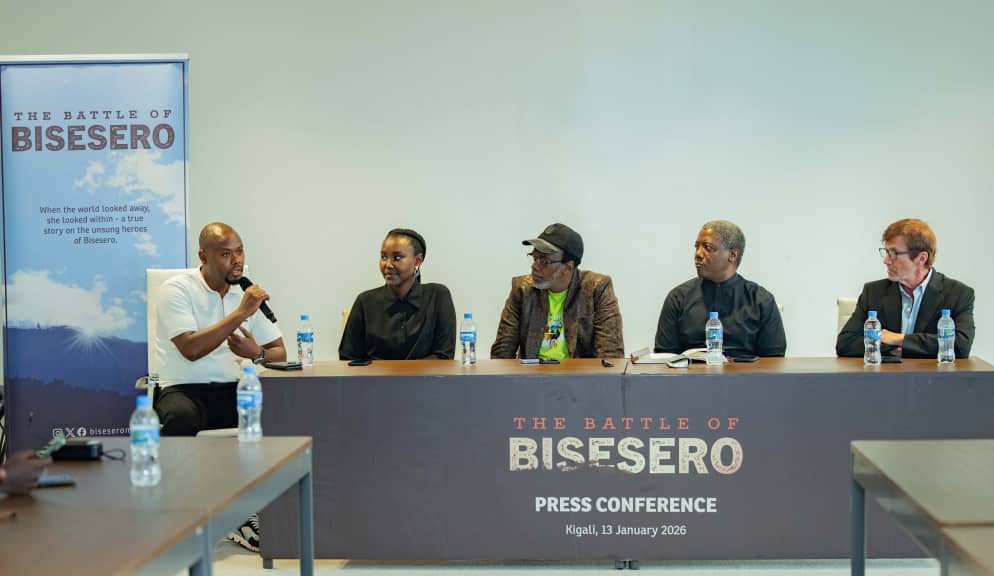
In January 2026, The Battle of Bisesero was officially launched, marking a major step in bringing one of the most significant yet underrepresented stories of resistance during the 1994 Genocide against the Tutsi to the screen. Karekezi co-wrote the screenplay with Mandla Dube, the South African award-winning director, on a film that revisits the courage of civilians who organized to defend themselves against genocidal forces. The project stands as part of Karekezi’s continued commitment to documenting stories that risk being erased if not preserved through cinema.
Alongside this, Karekezi is currently developing Capitaine Mbaye, a feature film based on the true story of Senegalese UN officer Captain Mbaye Diagne. Deployed to Kigali as a military observer during the genocide, Diagne defied orders and repeatedly risked his life to save hundreds of civilians. The project, written and directed by Karekezi, is being developed as a Rwanda–Belgium–France–Senegal co-production, with support from institutions including the Organisation internationale de la francophonie (OIF), the Red Sea Fund, and Senegal’s Film and Audiovisual Industry Promotion Fund (FOPICA).
What ultimately distinguishes Joël Karekezi’s cinema is its craft as much as its conscience. Across his films, the performances are restrained yet deeply affecting, the scripts precise and emotionally grounded, and the visual language confident without excess. Karekezi directs actors with sensitivity, allowing silence, gesture, and atmosphere to carry meaning where dialogue would fail. His storytelling demonstrates a maturity that places Rwandan cinema firmly on the international stage—not as an emerging voice seeking validation, but as a cinema already operating at the highest level. Through disciplined writing, strong ensemble performances, and thoughtful direction, his films affirm that Rwandan filmmakers are not catching up to global standards; they are actively contributing to them.
Beyond directing and writing, Karekezi has consistently emphasized the urgency of documentation, particularly when it comes to genocide memory. He has spoken openly about the danger of forgetting, especially as denial and distortion persist and firsthand witnesses grow fewer with time. For him, storytelling is not optional but a responsibility shared by all who carry these histories.
This philosophy also informs his work as a mentor. In 2020, he founded a film residency school in Rwamagana, Eastern Province, where he trains young Rwandans in directing, screenwriting, producing, acting, and technical filmmaking skills. With limited resources but strong collaboration, the initiative has already trained dozens of young storytellers, equipping them to tell stories rooted in their own realities.
Throughout his journey, forgiveness remains a central, evolving theme. Through films, documentaries, and conversations with survivors and perpetrators, Karekezi has explored what it means to remember without being consumed by revenge. His cinema does not offer easy answers, but it insists on dignity, responsibility, and humanity.
Today, Joël Karekezi stands as a filmmaker whose work bridges personal history and collective memory. In a landscape where silence can be as dangerous as violence, his films argue for remembrance—not only as an act of survival, but as a commitment to truth, justice, and future generations.