
Behind the Scenes Review: Family, Loyalty, and Betrayal
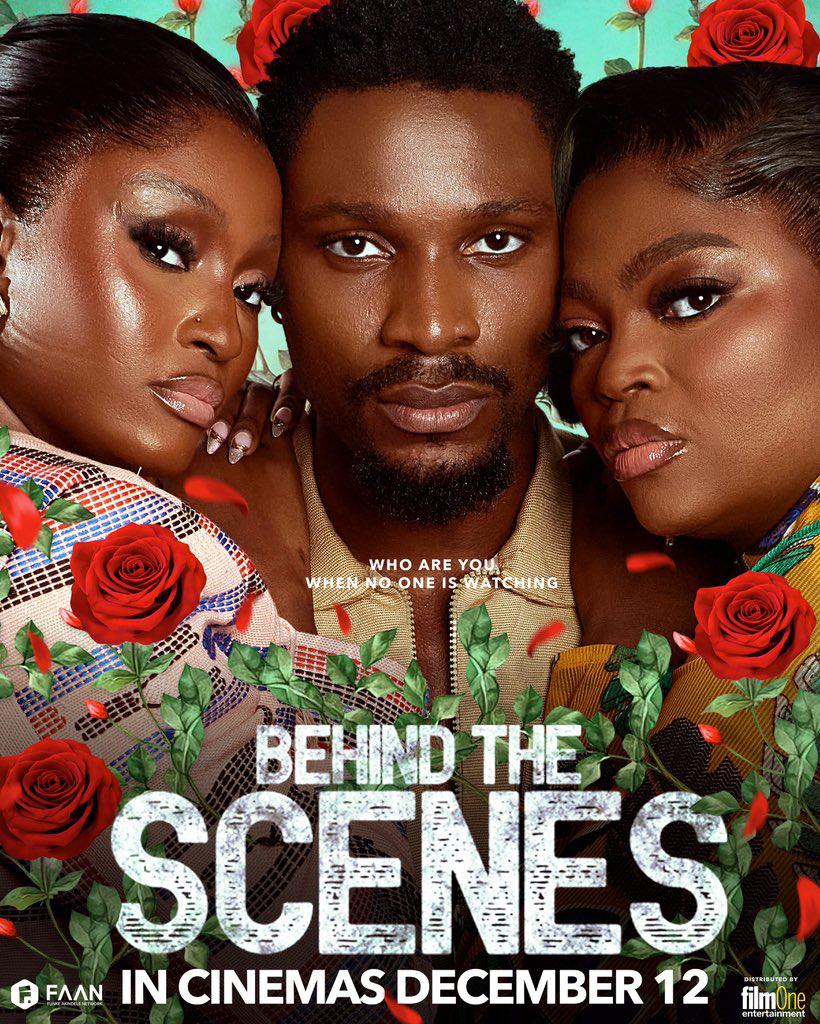
What happens when the people you have sacrificed for the most become the very people you can no longer trust?
In Behind the Scenes, Funke Akindele explores a painful reality that many people can relate to: being surrounded by family members who are always willing to receive but rarely willing to give back.
Released on 12 December 2025, Behind the Scenes is a Nigerian drama film produced by Funke Akindele and Wendy Uwadiae Imasuen, and directed by Funke Akindele alongside Tunde Olaoye. Written by Funke Akindele, Collins Okoh, and Uche Mordi, the film explores family relationships, generosity, loyalty, betrayal, and personal boundaries.
The story follows Aderonke "Ronky-Fella" Faniran (Scarlet Gomez), a successful widowed real estate entrepreneur whose generosity has made her the backbone of her family and social circle. After being diagnosed with lupus, she begins to question whether the people around her genuinely care about her or simply depend on her wealth. More importantly, she starts wondering what would happen to her children if she were no longer around. Would the same people she has supported for years step up for them, or would they abandon them when they needed help the most?

The film arrives at a time when Funke Akindele has firmly established herself as one of Nollywood’s most successful filmmakers. Having previously delivered box-office hits such as Everybody Loves Jenifa, A Tribe Called Judah, Battle on Buka Street, and Omo Ghetto: The Saga, expectations for Behind the Scenes were understandably high. The film went on to become one of Nollywood’s biggest commercial successes, further cementing Akindele’s position as one of the industry’s most influential filmmakers.
Beyond the numbers, Akindele has built a reputation for telling stories that balance entertainment with social commentary. Behind the Scenes continues that tradition by tackling issues such as entitlement, family obligations, and personal boundaries while remaining accessible to a wide audience.
Building a believable world
One of the film’s greatest achievements is how convincingly it creates a world that feels lived in and recognisable. From the opening party sequence, Behind the Scenes immediately establishes a believable environment. The event feels like an actual celebration rather than a staged film set, with enough guests, activity, and energy to make the scene feel authentic.
The costume design contributes significantly to this realism. Characters are dressed according to their personalities, lifestyles, and social status. Traditional Nigerian attire and contemporary fashion choices help ground the story within its cultural setting while making the characters feel like real people rather than fictional creations.
The attention to detail throughout the film is particularly impressive. The Faniran home feels lived in, with family photographs, decorative pieces, furniture arrangements, and everyday objects helping to create a convincing family environment. Even the way characters dress at home, at work, or during celebrations reflects the situations they are in.
The film also does an excellent job of visually distinguishing social classes. The homes of wealthy characters differ noticeably from those of less privileged characters, making it easy to understand each person’s social standing without the film having to explain it. Johnson’s mother’s house, for example, looks very different from the luxurious homes occupied by wealthier characters, and that contrast adds to the film’s realism.
One detail I particularly appreciated was the continuity surrounding Adetutu’s cosmetic surgery. I honestly did not pay much attention to it until Adewale mentioned it later in the film. Looking back, I realised the visual details had been there from the beginning and remained consistent throughout. It is a small detail, but it demonstrates the filmmakers’ attention to continuity.
The makeup department also deserves recognition for the realistic portrayal of Aderonke’s lupus symptoms. The visible rashes and physical changes make her illness feel believable and help us understand the seriousness of her condition.
The nightclub scenes are equally effective. The lighting and atmosphere immediately communicate where the characters are and what kind of environment they are in without requiring any explanation. Similarly, the location where Aderonke isolates herself while monitoring events reflects her emotional state. Despite her wealth, the dark and lonely environment suggests that she is not there for comfort or happiness, but rather consumed by disappointment, anxiety, and uncertainty.
Overall, the production design team deserves praise for creating a world that feels authentic, detailed, and lived in.
Visual storytelling
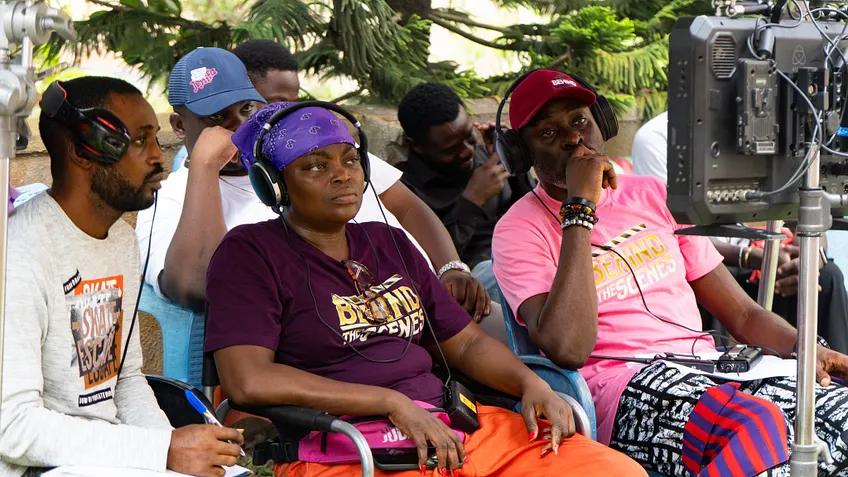
The cinematography serves the story well. Wide shots are used effectively to establish locations and show the scale of events, while medium shots allow viewers to observe both the characters’ facial expressions and body language. Close-ups are frequently used during emotional moments, allowing the audience to sit with a character’s anxiety, sadness, anger, or joy.
The camera movements also help keep the film visually engaging. Tracking shots, pans, and dolly movements guide viewers naturally through scenes and help maintain a sense of movement rather than relying on static compositions.
I also appreciated how the film often directs viewers’ attention to important information without over-explaining it. For example, references to Aderonke’s late husband are supported visually through photographs, allowing the audience to quickly understand his significance without lengthy dialogue.
That said, while the cinematography is effective, I felt it lacked a level of visual creativity that could have elevated the storytelling further. The film relies heavily on conventional shot choices that communicate information clearly but rarely add deeper meaning. More expressive use of lighting, framing, or camera angles could have strengthened certain character arcs and emotional moments. For instance, visual techniques could have been used more deliberately to reflect characters’ inner conflicts or hidden intentions. The cinematography supports the performances well, but it rarely enhances them in a way that leaves a lasting visual impression.
Keeping the story moving
The editing may not be particularly ambitious, but it is effective. The film relies heavily on family drama, conversations, and emotional confrontations, and the editing keeps these moments flowing smoothly. Scene transitions are clear, the pacing remains consistent, and the cuts never become distracting. Most importantly, the editing succeeds in keeping viewers engaged throughout the film.
The performances steal the show
The performances are undoubtedly among the film’s greatest strengths.
Funke Akindele delivers an outstanding performance as Adetutu Fernandez. She fully commits to the character, portraying her manipulative and self-centred tendencies with such conviction that I found myself genuinely disliking her by the end of the film. That reaction alone speaks to how effectively she embodied the role.

Funke Akindele
Scarlet Gomez is equally impressive as Aderonke. Her performance becomes especially powerful after her diagnosis, as she navigates the emotional weight of her circumstances. What stood out to me most were the moments when she watched her children being mistreated through the surveillance cameras. Seeing her struggle between sticking to her plan and rushing to protect them felt incredibly human. The trembling hands, tears, and visible emotional breakdowns never felt forced. As a mother who had always been there for her children, watching them suffer while choosing not to intervene immediately was clearly taking a toll on her. At times, I found myself deeply affected by her pain, and those scenes were among the most emotionally convincing in the film.
The supporting cast also deserves recognition. From family members constantly looking for handouts to elders who felt entitled to Aderonke’s money simply because she was wealthy, each actor understood the assignment. Their performances felt natural and believable, making the family dynamics frustrating to watch in the best possible way. Even the child actors contributed meaningfully to the emotional weight of the story.
Sound and atmosphere
The sound design effectively supports both the realism and emotional impact of the film. Ambient sounds are used well, particularly during social gatherings where conversations and background noise create a believable atmosphere.
The soundtrack is also used strategically throughout the film. During suspenseful moments, the music helps build anticipation and signals that something significant is about to happen. In scenes involving shocking discoveries and dramatic revelations, the score heightens tension and draws viewers further into the moment. In quieter scenes, it subtly supports emotional beats without overpowering the performances.
Dialogue remains clear throughout, even in crowded environments, allowing viewers to remain immersed in the story without struggling to follow conversations.
A Story behind the film
One of the film’s strongest qualities is its exploration of family dependency and entitlement. The story tackles a reality that exists in many families, where one successful member becomes responsible for supporting everyone else, often at great personal cost.
I particularly appreciated the way the film handled Adewale. Rather than portraying him as entirely good or entirely bad, the story allows him moments of growth, regret, and compassion. Despite his flaws and poor decisions, he still shows concern for Aderonke’s children. This complexity makes him one of the film’s most human and believable characters, and it prevents the story from reducing every family member to the same stereotype.
The film also raises important questions about boundaries, responsibility, and the difference between genuine love and dependence. These themes are likely to resonate with many viewers because they reflect situations that exist in real life. In many ways, the film’s greatest strength is how often it feels rooted in realities that many families will recognise.
However, one of the film’s major narrative choices requires a considerable suspension of disbelief. While it ultimately drives the story forward, I found the central plan somewhat exaggerated and difficult to imagine happening in real life. Alternative approaches could have achieved similar results while feeling more believable and grounded.
I also felt that Aderonke’s interaction with Segilola regarding her luxurious hair was slightly out of character. Given how observant and suspicious Aderonke looked, the moment felt somewhat forced. A simpler compliment would have felt more natural and consistent with the character’s behaviour elsewhere in the film.
While I found some of the film’s major plot decisions difficult to believe, I never struggled to connect with the emotions behind them. The performances, family dynamics, and themes felt familiar enough to make me reflect on situations many people experience in real life.
Behind the Scenes is an engaging family drama that combines strong performances, detailed production design, and socially relevant themes. It asks uncomfortable but important questions about generosity, loyalty, and the people we choose to trust. More importantly, it reminds us that love and dependence are not always the same thing.
If you enjoy family dramas rooted in real-life social issues, stories about family loyalty and betrayal, or films that spark conversations long after the credits roll, Behind the Scenes is well worth watching. It is both entertaining and thought-provoking, offering lessons that extend far beyond the screen.