
Apex Review — Charlize Theron and Taron Egerton Deliver a Brutal Survival Thriller
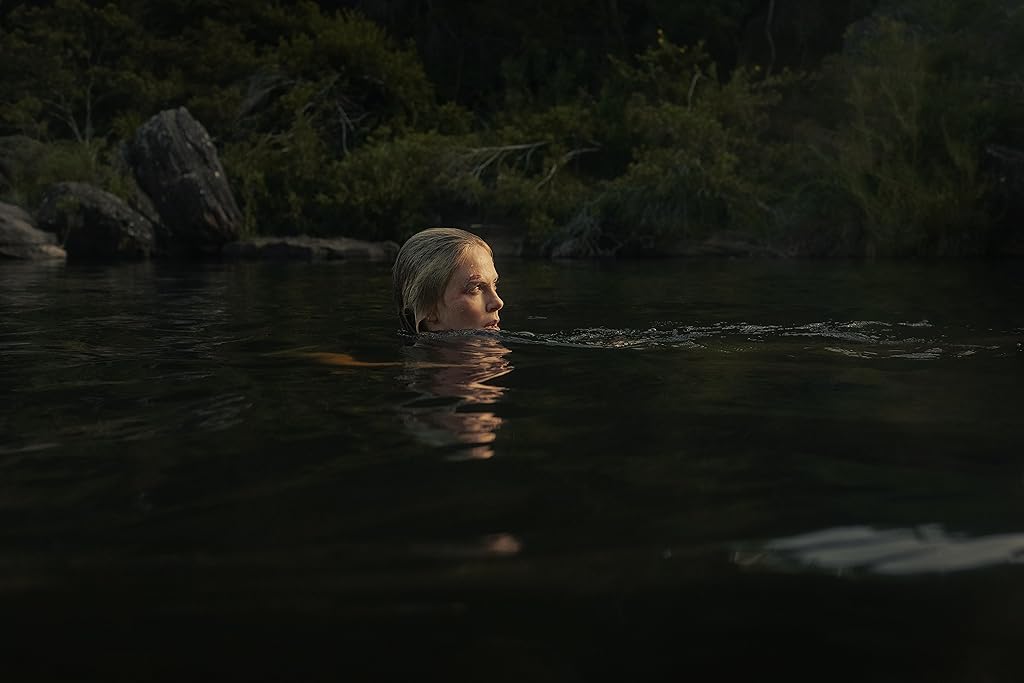
Haunted by the loss of her husband Tommy (Eric Bana) after a tragic climbing accident, Sasha (Charlize Theron) sets out alone into the wilderness in search of endurance, healing, and clarity. But what begins as a deeply personal attempt at emotional recovery soon spirals into a brutal fight for survival when she encounters Ben (Taron Egerton), a seemingly helpful stranger hiding far more sinister intentions.

Directed by Baltasar Kormákur and written by Jeremy Robbins, Apex premiered on Netflix on April 24, 2026. Filmed in the harsh yet breathtaking landscapes of New South Wales, Australia, the movie carries Kormákur’s signature fascination with endurance, nature, and physical vulnerability. As the director noted in behind-the-scenes interviews, “When I read the script, it felt very visceral to me — almost existential. Through action, through horror, through hardship, you reveal the characters.”
Technical execution and visual immersion
Apex is impressively crafted from a technical standpoint. The cinematography uses carefully chosen camera angles to immerse the audience in the characters’ psychological states. Intimate close-ups capture moments of fear, grief, suspicion, and emotional instability, while expansive wide shots emphasize the overwhelming isolation and beauty of the Australian wilderness. Medium shots effectively follow the actors through physically demanding sequences, and point-of-view shots place viewers directly inside Sasha’s terrifying experience.

The visual composition is particularly striking. Even during massive landscape shots of forests, cliffs, and rivers, the framing consistently guides the viewer’s attention toward crucial narrative details without sacrificing the grandeur of the environment. The film also uses the scale of the landscape to emphasize vulnerability, often making the characters appear physically consumed by their surroundings.
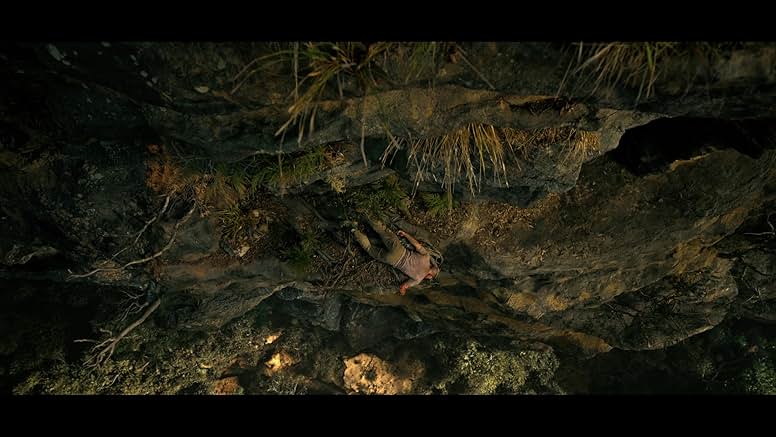
The sound design further strengthens the film’s atmosphere. Ambient sounds, distant echoes, rushing water, and shifting winds create a convincing sense of isolation within the mountains, while the dialogue remains sharp and intelligible even during chaotic action scenes.
The sound effects are especially effective during the survival and climbing sequences, where every scrape against the rocks, unstable footstep, and sudden impact intensifies the danger onscreen. Whether it is Tommy’s fatal fall, Ben crashing down the rocks, or Sasha repeatedly slipping on the edge of disaster, the sound design makes every moment feel painfully immediate and physically dangerous. This is paired with an atmospheric score that steadily heightens the tension without overwhelming the scenes.
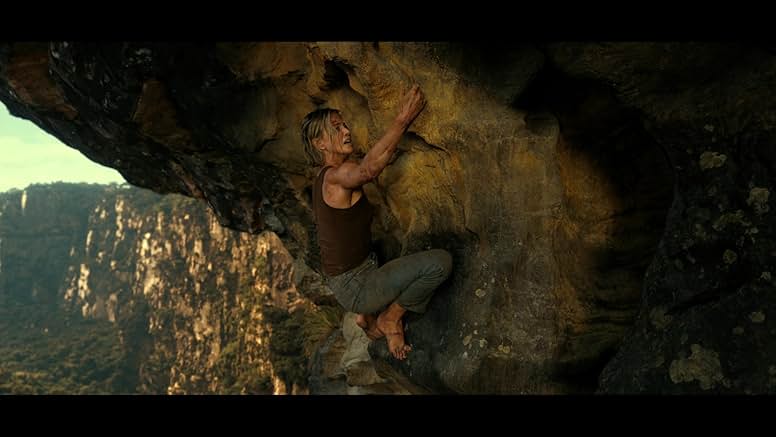
From an editing standpoint, Apex maintains relentless momentum. The transitions between scenes are smooth and purposeful, allowing the narrative to move quickly without feeling disjointed. The film smartly escalates tension in stages, gradually shifting from emotional drama to survival thriller before fully embracing psychological horror. At only 95 minutes, the movie wastes very little time, sustaining a gripping pace from beginning to end.
The grounded production design also deserves praise. The mountains feel convincingly deserted, reinforcing Sasha’s vulnerability, while Ben’s cavernous hideout is claustrophobic, gruesome, and deeply unsettling. The costumes and makeup further enhance the realism, from the practical climbing equipment and weathered camping gear to the convincing physical injuries and exhaustion visible on the actors’ faces.
The power of Chiaroscuro and performance
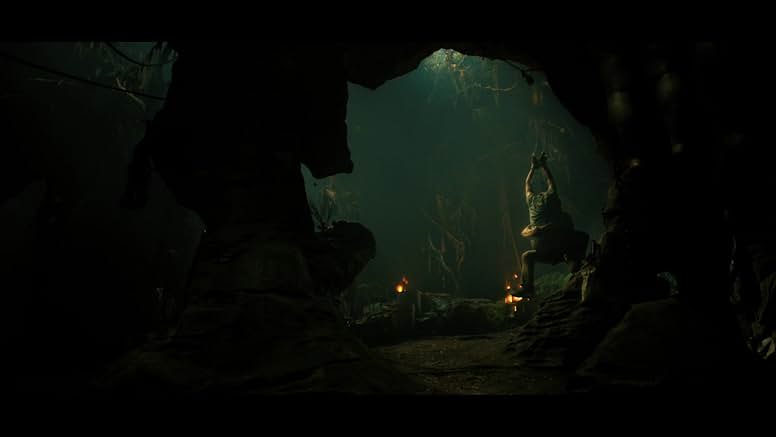
One of the film’s strongest visual moments arrives during the subterranean climax inside Ben’s cave. The lighting design uses stark contrasts between light and shadow to create a striking visual metaphor for Ben’s fractured psyche. In one particularly memorable shot, half of his face is illuminated while the other disappears into darkness before he vanishes entirely into the shadows. It is a simple but effective use of chiaroscuro that reinforces the character’s instability and monstrous nature.
Ultimately, however, it is the performances that carry Apex.
Charlize Theron delivers one of the film’s emotional anchors, fully embodying Sasha’s vulnerability and resilience. Her performance is filled with subtle but devastating details: the hesitation in her voice when speaking about Tommy, the quiet facial expressions that reveal flashes of grief, and the exhaustion etched into her body language during the survival sequences. Even in the film’s most physically demanding moments, Theron never loses sight of Sasha’s emotional fragility.

Taron Egerton is equally compelling as Ben, transforming from a deceptively charming guide into a deeply disturbing predator with chilling ease. Egerton avoids caricature, grounding Ben’s menace in unsettling unpredictability rather than exaggerated theatrics. His calm demeanor often feels more frightening than outright violence, making the character’s outbursts even more unnerving.

Themes beneath the survival thriller
Beyond its thriller mechanics, Apex explores grief through the lens of survival. Sasha enters the wilderness searching for emotional escape and personal endurance, only to encounter violence in its most human form. The film contrasts the indifferent danger of nature with Ben’s deliberate cruelty, creating a tension between surviving the environment and surviving another person’s malice.
The wilderness also functions as a form of emotional purgatory. Removed from civilization, Sasha is forced to confront both physical death and the unresolved trauma of losing Tommy. In this sense, the survival narrative becomes intertwined with her emotional struggle to reclaim the will to live.
Narrative missteps
Despite its many strengths, Apex occasionally stumbles in its writing.
One of the areas where Apex feels underdeveloped is in its treatment of Ben’s character. Despite Egerton’s strong performance, the writing does not fully explore Ben as a character. The film relies too heavily on the idea of the mysterious psychopathic predator without offering enough psychological insight to make him truly memorable. A deeper exploration of his worldview or pathology could have added stronger thematic complexity and elevated the conflict beyond surface-level terror.
The script also mishandles aspects of Sasha’s emotional arc. The issue is not that she seeks adventure after experiencing devastating grief — in fact, that impulse makes sense psychologically. The problem is that the film rarely frames these moments as extensions of her trauma, escapism, or emotional self-destruction. As a result, some scenes of kayaking and exploration feel emotionally disconnected from the loss that supposedly drives her journey. This weakens the thematic weight of her mourning and occasionally makes her grief feel more like a narrative setup than a fully realized emotional experience.

There are also moments where the script asks the audience to overlook questionable logic, particularly regarding how effortlessly Ben tracks Sasha across vast terrain without clear indicators. While these lapses never derail the film entirely, they do momentarily strain credibility.
Apex may not reinvent the survival-thriller genre, but it succeeds as a gripping, expertly crafted adrenaline rush anchored by two committed performances. Baltasar Kormákur’s confident direction, immersive technical execution, and striking wilderness cinematography transform a familiar premise into an engaging cinematic experience.
While the screenplay lacks some psychological depth and occasionally undercuts its emotional ambitions, the film’s relentless pacing and visceral atmosphere make it consistently entertaining from beginning to end. Even when its writing falters, Apex never loses its grip as a tense, visceral descent into grief, isolation, and survival.